

“A recent study of disenfranchised young people attending alternative learning in Aotearoa New Zealand indicated that when the developmental needs of young people are met, learning happens ... The developmental need that mattered first and foremost was identity and belonging; young need to feel safe and connected before they can effectively learn” (Berkett et al., 2026, pg. 12).
This quote from the Youth Development and Education Network Aotearoa pretty much says it all. For students to succeed—and students in Alternative Education in particular—the most important factor is a sense of belonging.
In Māori culture, the term whakawhanaungatanga is used to signify an extended family-like environment. When I learned this word, I realized that it fully encapsulated what I’d seen and experienced at all AE sites I’d visited.
School sites have created systems and structures to foster belonging. One example is whānau groups, a similar model to advisory in secondary schools, in which students meet in small groups with one teacher a few times a week — and even do chores together! (See photo artifact below). Here, one educator notes some changes they made to the structure of the day to support belonging as well:
“Enhancing the mana of each student, isn't it and how we have set up our groups going from each student doing different achievement standards to now the whole group doing the same. Like the success of the collective rather than that of the individual ... the success of the collective group has been quite uplifting.”
Trust is a huge component of relationship building in AE, as noted by another educator:
“They need to trust you. Yeah, Yeah, they don't trust people easily. Once they see that other students trust you, they are more likely to give you a chance.”
Students affirm these feelings:
“I never fit in at any school ... I dropped out when I was 15 because I thought, yeah, you know, school ... but since I got pregnant, came here, I actually feel welcome and I feel more happy and I can actually learn.”
This school leader, however, truly embodies the process of integrating culture and belonging in order to create a positive learning environment:
“Helping them understand who they are and where they come from ... in Māori, we say ko wai ahau? Who am I? And helping them dig down into their whakapapa (ancestry) and learn where they come from, where their land is, who their ancestors are. And then once they start getting a sense of that, we help build that into our environment here, making sure that we reflect who they are is a good first place really, that we start with belonging."
Foster whakawhanaungatanga, an extended family-like environment.

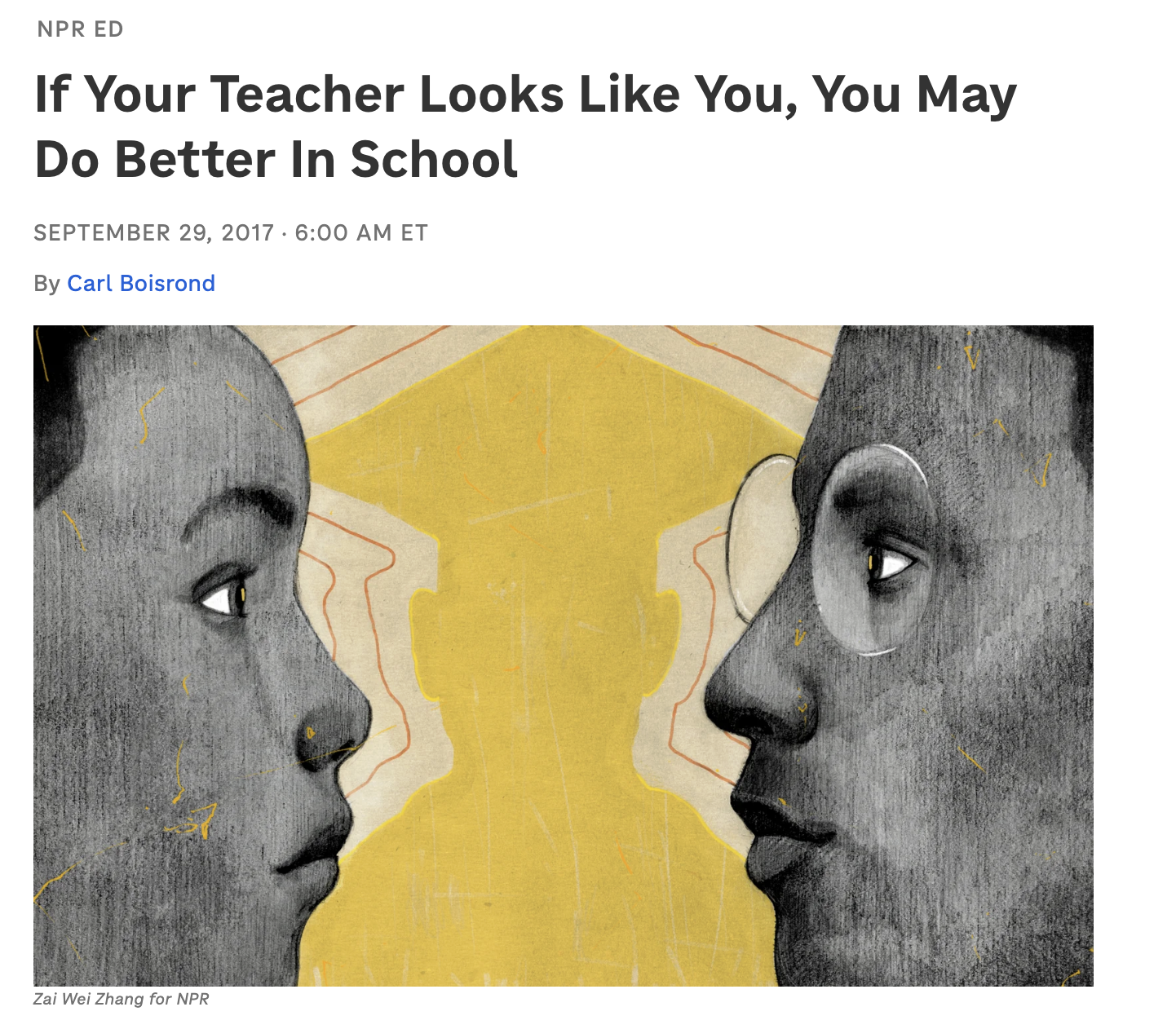
We all know how important it is for students to see themselves in their educators. There have been many studies done in the U.S. regarding how important it is for students of color to have teachers who look like them sometime in their school career — and how this can positively affect their outcomes. This headline from National Public Radio below is just one example.
Both of the TPU sites that I visited took this recommendation to the next level, in that they had more than one employee who was past graduate or had family relationships to the school site. This was so special to see.
As one teacher, a graduate of the TPU in which she currently works, said:
“You connect with the students on just a completely different level, you know, like you're just open and honest about past experiences, home lives, etc.”
At one point, I observed students this TPU compliment her outfit and one say something like,
“There’s hope! Someday I can make money and shop at Farmer’s (a department store) just like [teacher name.]”
Don’t underestimate the power of seeing yourself in your teachers.
Honor the importance of community in staffing.
Western society can often look down on those in need, expecting gratitude and assuming indolence.
When working in Alternative Education, where many students rely on social services and other community-based supports, it is vital to ensure that students are treated with respect — both in the school setting and beyond.
As one student notes, as she explains why she comes back to school every day:
“I think ... [it’s] the relationship and how we are treated. We’re not spoken to with this kiddie voice ... we’re very respected here.”
I observed a beautiful and moving example of holding dignity at the forefront, as described in the anecdote below:
When the girls arrived to the Mother’s Day event, they were greeted with bubbly grape juice in champagne flutes. They were then led into a donation area was set up like a fancy boutique, complete with dressing rooms. The girls were told to pick out anything that they’d like. After they’d made their choices, their clothes were elegantly wrapped in tissue paper and put in bags.
When they’d finished shopping, students were treated to an afternoon tea that would compete with any posh Wellington cafe. Finally, a volunteer pastry chef gave them a lesson on how to decorate cupcakes – for themselves! Overall, it was a true lesson in how to provide targeted support with dignity.
Do it with dignity.